1. Why Does Mouse Pad Material Matter?
Choosing the right material is one of the most important decisions when developing a custom mouse pad. The material affects how the mouse moves, how the product feels during daily use, how easy it is to clean, and how long it can maintain its appearance. For brands and buyers, selecting the right material also helps determine the product’s target market and price positioning.
Fabric, PU leather, and rubber-based materials are commonly used in mouse pad and desk mat production. However, they serve different purposes. Fabric is often chosen for its comfortable surface and printing flexibility, PU leather is popular for its clean and professional appearance, while rubber is widely used as a base material because of its flexibility and grip. Understanding these differences can help you make a more suitable choice.

2. Fabric Mouse Pads: Comfortable and Versatile
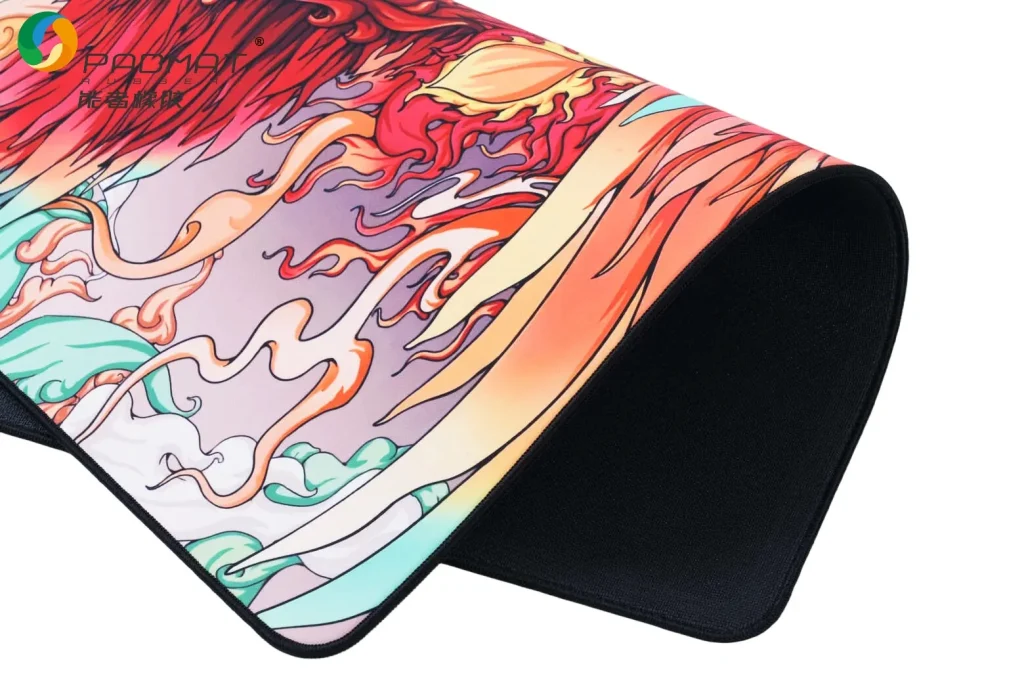
Fabric mouse pads are one of the most common choices for office users and gaming enthusiasts. Their soft surface provides a comfortable feel for everyday use, while different fabric textures can offer different levels of mouse control and glide. They are also suitable for full-color printing, making them a popular option for brands that want to display logos, illustrations, or custom artwork.
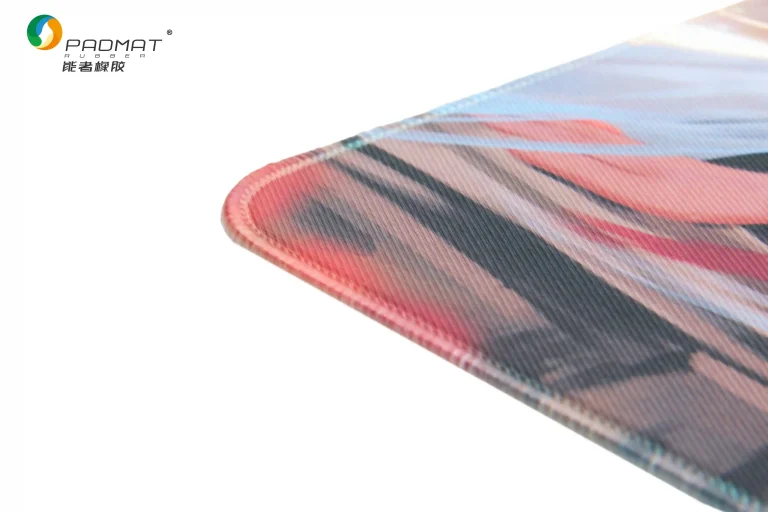
Another advantage is the wide range of customization options. Fabric mouse pads can be produced in different sizes, thicknesses, surface textures, and edge styles. They are suitable for standard mouse pads, large gaming mouse pads, and extended desk mats. However, fabric surfaces may absorb dust or stains more easily than smooth materials, so proper cleaning and maintenance are important.
3. PU Leather Mouse Pads: Clean and Professional
PU leather mouse pads are often selected for office environments, business gifts, and premium desk accessories. Their smooth surface creates a neat and modern appearance that works well with minimalist workspaces. Compared with many fabric surfaces, PU leather is generally easier to wipe clean, making it a practical choice for users who prefer low-maintenance desk accessories.
PU leather also offers opportunities for branding through different colors, textures, surface finishes, and logo applications. It can be used for mouse pads and larger desk mats, especially when appearance is an important selling point. However, its surface feel is different from fabric, and it may not provide the same glide or control preferred by some gaming users. Buyers should also consider the quality of the PU material, as durability and resistance to wear can vary.
4. Rubber Mouse Pads: Flexible and Functional
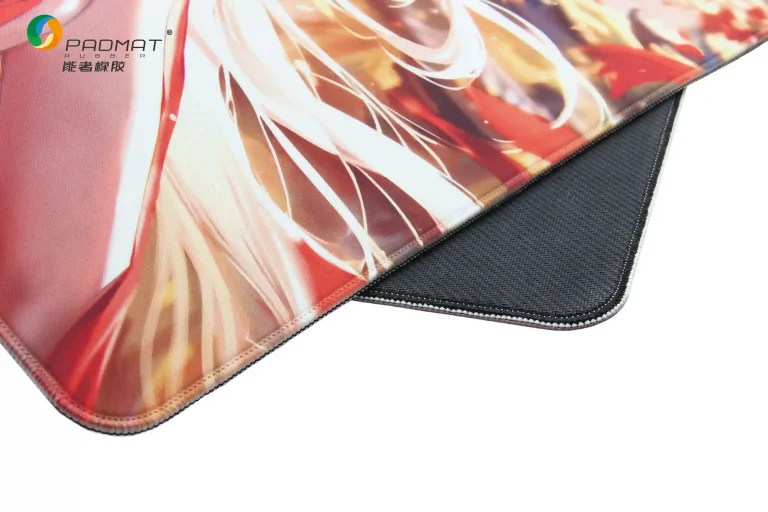
Rubber is widely used in mouse pad manufacturing, particularly as the bottom layer. A rubber base helps the mouse pad stay in position during use and provides flexibility across different product designs. Its thickness and density can also influence cushioning and overall stability. For this reason, rubber is an important material in many fabric mouse pads and gaming mouse pads.
Rubber-based materials can also be used in different types of mats, depending on the formulation and product structure. They offer flexibility in thickness, shape, and surface combinations, making them suitable for OEM and ODM development. However, rubber alone does not always provide the ideal mouse-tracking surface. In many designs, it works best when combined with a fabric or other functional top layer.
5. How to Choose the Right Material for Your Brand
There is no single material that is best for every mouse pad. If your target customers value comfort, printing options, and gaming performance, fabric is a strong choice. If they prefer a smooth, elegant appearance and easy cleaning, PU leather may be more suitable. If your priority is grip, flexibility, and product structure, rubber is an essential material to consider, especially for the base layer.
Before choosing a material, consider the product’s intended use, target price, design requirements, and expected order quantity. Requesting samples is also highly recommended. Comparing surface feel, thickness, flexibility, printing quality, and base grip in person can help you avoid choosing a material based only on appearance or price.
Conclusion
Fabric, PU leather, and rubber each have their own advantages in mouse pad manufacturing. Fabric offers comfort and printing flexibility, PU leather provides a clean and professional look, and rubber supports stability and flexible product construction. The right choice depends on your customers, product positioning, and design goals.
At Padmat Rubber, we provide OEM and ODM manufacturing for custom mouse pads and rubber mat products. From material selection and surface customization to product development and mass production, we help brands turn their ideas into finished products. Contact us to discuss the right material and design for your next mouse pad project.